
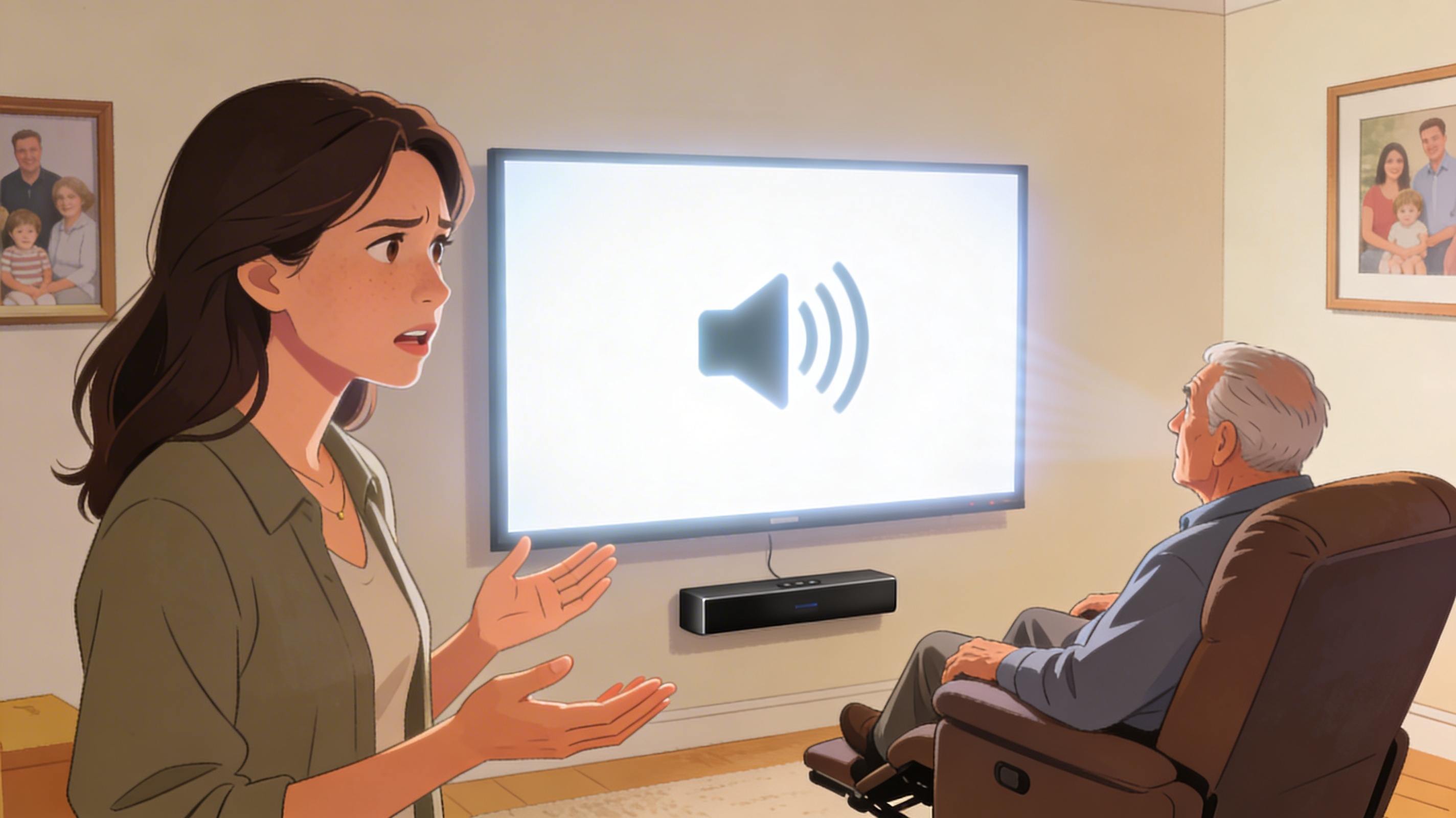
Is It Your Hearing or Just a Loud TV? A Simple Guide From a Former Hearing Instrument Specialist
If your TV keeps creeping louder, and your wondering is it your hearing or just a loud tv and your family says they can hear it from the driveway, and you’re still thinking, “What did they just say?”, you’re not alone. I’ve seen this pattern hundreds of times in my years as a hearing instrument specialist.
In this guide, I want to walk you through, step by step, how to figure out whether it’s really “just the TV”… or whether your ears are quietly asking for help – and what you can do right now from home.
What I See Over and Over Again
Most people don’t start with, “I think I have hearing loss.” They start with things like:
- “The TV is never loud enough for me, but everyone else complains.”
- “I can hear people talking, but I can’t understand them.”
- “I’m worn out after family gatherings because listening is so much work.”
If that sounds familiar, I’d gently say: this is exactly how age‑related hearing loss often shows up. It sneaks in slowly. You don’t wake up deaf. You just notice more little frustrations over time.
A good way to explain this is what happened with my eyes. When my eye doctor told me I had cataracts, I knew my glasses prescription wasn’t helping like it used to, but I didn’t realize how much I had lost. After surgery, I walked into my house and thought, “Wow.” I had always believed our ceilings were a beige or cream color. It turned out they were actually white – and every color in the room looked brighter and clearer. I hadn’t noticed the slow dimming until it was gone. Hearing loss works the same way. You often don’t realize how much you’re missing until you finally hear clearly again.
As a former hearing instrument specialist, I don’t want you to ignore those early signs. Catching it now gives you far more options and a much easier path forward.
Step 1: Could Earwax Cause My Hearing Loss?
Before you assume you have permanent hearing loss, it is smart to ask whether earwax could be part of the problem.
Wax buildup can make hearing seem muffled and can leave you with a plugged or full feeling in one or both ears.
I have a post with more info on earwax and how to keep from going to and ENT for simple wax removal. Read the post: Could Earwax Be a Cause for My Hearing Loss?
If earwax does not sound like the issue, or if your ears have already been checked, move on to Step 2.
Step 2: Get a Quick Hearing Check at Home
If I could sit with you at your kitchen table, the first thing I’d suggest is simple:
“Let’s get you a quick, private hearing check you can do at home.”
A good online hearing test won’t replace a full hearing exam, but it can tell you if your hearing looks “pretty normal” or if there’s a noticeable drop that deserves more attention.
Most online tests from reputable companies follow the same basic idea
- You sit in a quiet room.
- You put on a pair of headphones.
- You listen for a series of sounds or words and tap when you hear them.
- In a few minutes, you get a simple result and suggested next steps.
Why I strongly recommend using headphones
From my professional experience, headphones make a big difference.
They:
- Cut down on echo and room noise.
- Let the test check each ear separately.
- Give you a more realistic picture of how your ears are actually hearing.
You don’t need anything fancy. A basic over‑ear or on‑ear pair is usually enough for a good screening.
For the best results, I recommend using a simple, comfortable pair of headphones during your online hearing check. You don’t need anything fancy – just something that sits well on your ears and gives clear sound.
See My Recommended Headphones on AmazonOnce you have headphones handy, here’s what I’d recommend:
- Find a quiet, comfortable spot where you won’t be interrupted.
- Put on your headphones and set your computer or phone volume to a normal, comfortable level.
- Start a trusted online hearing test and follow the on‑screen instructions.
In just a few minutes, you’ll see whether your hearing looks within the expected range for your age or if there are signs you should look into further.
Check Your Hearing From Home
These free online hearing screenings can be a helpful first step if you are worried about hearing loss. They do not replace a full diagnostic hearing exam, but they may help you decide whether it is time to follow up with a licensed audiologist.
National Hearing Test
The National Hearing Test is an independent hearing screening that can be taken online with headphones or by phone. Its results are confidential and are not shared with hearing product providers. It is also free once a year for AARP members.
Visit National Hearing TestAudioNotch Speech-in-Noise Test
This free online screening measures how well you hear speech in background noise using a clinically validated digits-in-noise protocol. It is especially useful for people who can hear voices but struggle to understand words clearly in noisy places.
Take Speech-in-Noise TestAudioNotch Online Hearing Test
AudioNotch also offers a free online hearing test that produces a standard audiogram in under 10 minutes. It requires headphones and can be a convenient at-home screening to share with your doctor if needed.
Take Online Hearing TestImportant: Online screenings are only a first step. If the results suggest a more than moderate hearing loss, schedule a complete hearing evaluation with a licensed audiologist.
An online hearing test is a smart first step, but it’s also important to know when it’s time to get a full evaluation from a hearing professional.
When to See a Hearing Professional
Online screenings are a helpful first step, but they are not a substitute for a complete hearing evaluation. If your online test shows results outside the normal range, or if you are still worried about your hearing even when the screening looks “okay,” it is time to schedule a full exam with a licensed audiologist or a doctor who specializes in hearing.
You should also see a professional promptly if you notice any of the following: a sudden drop in hearing in one or both ears, new ringing or buzzing (tinnitus) that will not go away, pain or pressure in your ears, dizziness or balance problems, or if family members say your TV or radio is much louder than they find comfortable. A complete hearing evaluation can confirm whether you have hearing loss, identify any medical issues that need treatment, and help you decide whether hearing aids or other options are right for you.
If the hearing test suggests a mild or moderate hearing loss, the next step may be easier and not as expensive as you might think. Check out my comparison chart below of three of the most popular and inexpensive OTC hearing aids that do not require a prescription. Note: I’ve only included what I consider the most important feature in any hearing aid, Bluetooth compatibility and rechargeable.
OTC Hearing Aid Comparison
Only brands with the must-have features: Bluetooth and rechargeable batteries.
| Brand / Model | Bluetooth for Calls | Rechargeable | Popularity Rank | Review Rating | Highlights | Affiliate Link |
|---|---|---|---|---|---|---|
| LexieB2 Plus | YesStreams phone calls from compatible smartphones. | YesRechargeable with portable charging case. | #1Strong visibility across major OTC review coverage. | ★★★★★Approx. 4.5/5 in review coverage. | Self-fitting, app control, and a strong feature set for mainstream OTC shoppers. | Shop Lexie |
| LucidEngage Rechargeable | YesBluetooth streaming includes phone calls on supported phones. | YesRechargeable batteries built in. | #2Well-known from warehouse and retail exposure. | ★★★★☆Strong expert score and good value position. | Good speech performance and good value for cost-conscious buyers. | Shop Lucid |
| VivtoneXpure | YesSupports phone call and music streaming according to product listings. | YesRechargeable OTC model. | #3Smaller brand, but visible on large retail sites. | ★★★☆☆Budget-friendly option with more mixed review signals. | Lower-cost choice for shoppers who want Bluetooth features without paying top-tier prices. | Shop Vivtone |
Few Encouraging Words From Someone Who’s Been on the Other Side of the Desk
I’ve sat across from a lot of people who were nervous, embarrassed, or even a little stubborn about their hearing. That’s normal. Nobody likes to admit they’re missing things.
But I’ve also seen the look on people’s faces when they put on properly fitted hearing aids for the first time and say things like:
- “I didn’t realize how much I was missing.”
- “I can hear the TV at a normal volume again.”
- “I feel like I’m part of the conversation instead of just nodding along.”
That’s why I’m such a big believer in taking a small step now, instead of waiting another year or two.
On a personal note, I wear hearing aids myself. My main problem is high‑frequency hearing loss, which makes it especially hard to understand women, children, and TV dialogue – exactly what many of you are dealing with. Since being fitted with hearing aids, the difference has been huge. I don’t just hear sounds better; I actually understand what people are saying again.
Because I served in the U.S. Navy, I was able to get my hearing aids through the VA at no cost, and they’re high‑end devices, not the “cheap” kind. If you’re a veteran, it’s worth checking with your local VA clinic or VA health care office to see if you might qualify for similar benefits. You may be eligible for high‑quality hearing aids and ongoing support without having to pay out of pocket.
Disclaimer: As an Amazon Associate, I earn from qualifying purchases. This helps support my blog — at no extra cost to you. Thank you for your support!
For more details on affiliate links visit my affiliate disclosure page..