
Could Earwax Be a Cause for My Hearing Loss?
Could earwax be a cause for my hearing loss? Yes—and it’s one of the most common, fixable reasons people suddenly notice their hearing has dropped.
What Earwax Is Supposed to Do
Earwax (cerumen) is actually there to protect you. It coats the ear canal, traps dust and debris, and helps guard against infections. In most people, it slowly works its way outward as you talk and chew, then dries up and falls away on its own.
The problem starts when your ears produce more wax than they can naturally clear, or the wax is especially thick and sticky. Then instead of moving out, it lingers, builds up, and can eventually form a plug that blocks the ear canal. When that happens, sound can’t reach your eardrum the way it should, and you can end up with a very real, but very fixable, hearing loss.
How Earwax Can Affect Your Hearing
When wax builds up, it causes what we call a “conductive” hearing loss—sound is physically blocked from getting through to the eardrum. You might notice that one ear feels “plugged” or muffled, or you suddenly need to turn the TV up much louder than usual.
Other common signs include:
- A sense of fullness or pressure in one or both ears
- Mild discomfort or itchiness in the ear
- Sudden worsening of hearing after showering or swimming
- Occasional ringing or buzzing in the ear
The encouraging part is that if earwax is the only cause, your hearing often returns to normal once that blockage is removed.
Why Q‑Tips Often Make It Worse
Let’s talk about Q‑tips, because they’re one of the biggest culprits behind stubborn earwax blockages.
When you use a cotton swab, it feels like you’re cleaning your ear. You swipe away a little soft wax at the entrance, and the tip comes out a bit yellow, so it seems like you’re doing a good job. But what you can’t see is what’s happening deeper inside.
Most of the time, Q‑tips do this:
- Push the deeper wax farther down the ear canal
- Pack it tightly, like tamping coffee grounds
- Gradually create a hard plug that sits right up against the eardrum
On top of that, you risk scratching the delicate skin of the ear canal, causing irritation or infection, and in the worst cases, poking the eardrum itself. That’s why you often hear the old saying: “Don’t put anything smaller than your elbow in your ear.”
If you’ve been using Q‑tips regularly and now you feel blocked or muffled, there’s a good chance the swabs have helped push wax into a spot your ear just can’t clear on its own.
What Your Doctor or ENT Can Do
If you go to your primary care doctor, they’ll usually start by looking into your ears with a small lighted instrument called an otoscope. With that, they can quickly see whether there’s a big wax buildup or a complete blockage.
Depending on what they see, they may:
- Rinse the ear with warm water using a syringe or irrigating device to soften and flush out the wax.
- Manually remove the wax using small tools or gentle suction while they look into your ear.
If the wax is very hard, very deep, or right up against your eardrum—or if you have a history of ear surgery, perforated eardrums, or chronic ear problems—your doctor might send you to an ENT (ear, nose, and throat) specialist.
At the ENT’s office, wax is often removed while the doctor looks through a microscope for a close, magnified view. They can then use tiny hooks, curettes, suction tips, or tweezers to carefully chip away and pull the wax out. It’s effective, but it can be noisy, a bit uncomfortable, and, depending on your insurance, it can definitely be expensive.
The Less Comfortable Side of Wax Removal
Patients often tell stories like:
- “They flushed my ears so hard I felt dizzy afterward.”
- “The suction was so loud it felt like a vacuum right next to my eardrum.”
- “The wax was so hardened they had to work on it for quite a while.”
All of this is usually safe in experienced hands, but it’s not exactly a pleasant afternoon. And once you add in the time, the appointment, and the potential ENT bill, it’s easy to see why people look for other ways to stay ahead of earwax problems before they get that bad.
A Modern Way to See Inside Your Own Ears
For years, if you wanted to know what your ear canal looked like, you had to see a doctor. Now there are small camera‑based tools that allow you to see inside your own ears using your smartphone.
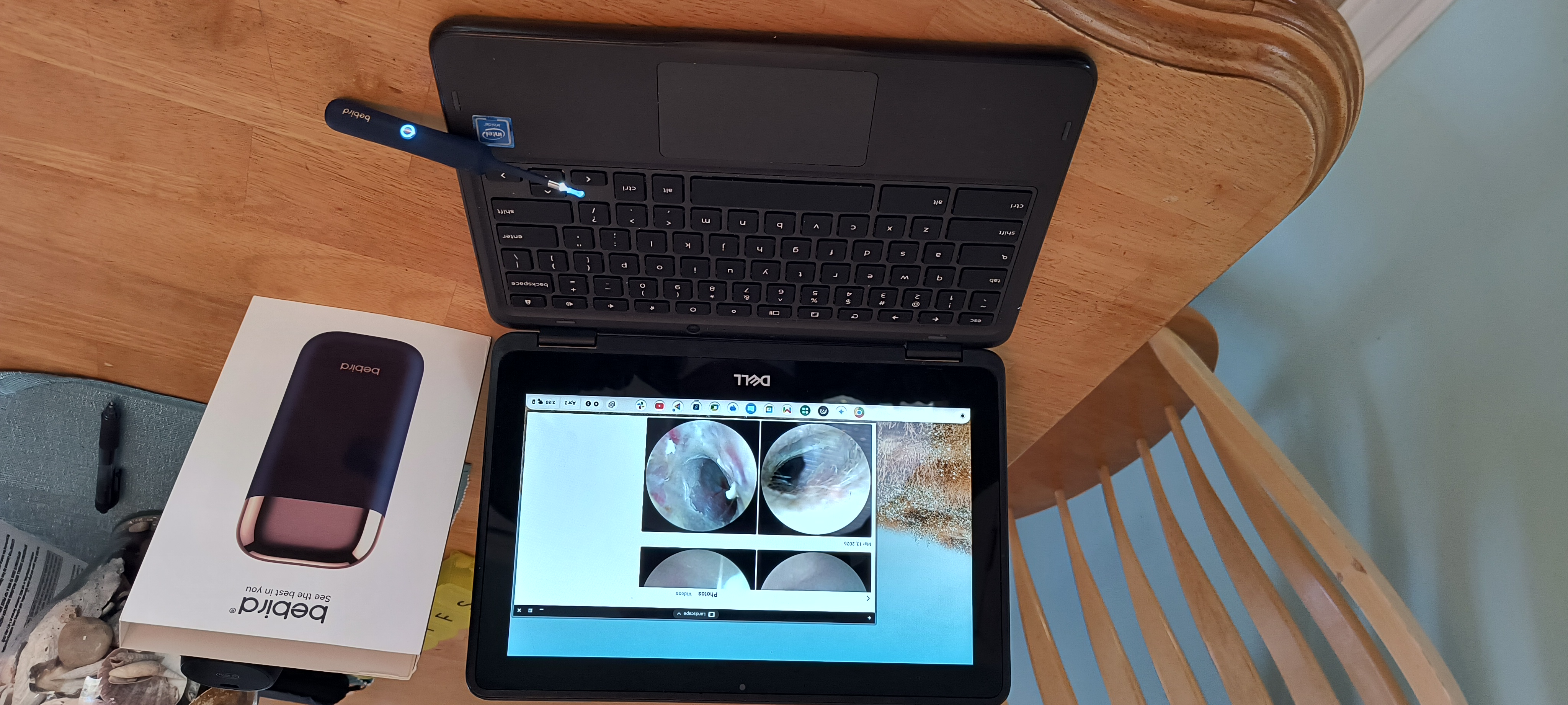
One example is the Bebird Earsight Plus D39R ear wax removal kit. It’s a slim ear camera with its own light that sends a live video image of your ear canal to an app on your phone. That means you’re not guessing—you can actually see the wax, the canal wall, and even the eardrum area if the view is clear.
The Bebird Earsight Plus D39R also comes with several attachments you can put on the end of the camera:
- Small spoon‑shaped tips that let you gently scoop out softer wax while watching on your phone.
- A tweezer attachment you can open and close to grab wax or small objects and pull them out.
- A flexible, comfortable design that makes it easier to move carefully inside the ear.
Because you can see exactly what you’re doing, you’re not blindly poking around like you would with a Q‑tip. Used carefully, that gives you a safer way to check for wax and, in many cases, remove it yourself.
See Inside Your Ear at Home
This is the ear camera tool I keep on hand at home
This camera-based ear cleaning kit lets you look into your ear on your phone and use small spoon or tweezer attachments to help remove wax more carefully.
View the Ear Wax Removal Kit on AmazonMy Personal Story: How I Avoided an ENT
Let me share a real‑life example of how useful this tool can be.
I had a situation where the end of my hearing aid—the tiny piece that sits deep in the ear canal—came off and stayed lodged inside my ear. I could tell something was wrong right away. I knew that leaving that piece in there could irritate my ear, raise the risk of infection, and certainly interfere with my hearing.
In the past, that would have meant a trip to the ENT. They’d sit me under the microscope, use fine instruments to grab the broken piece, and I’d walk out with a much lighter wallet.
Instead, using the Bebird Earsight Plus D39R with the tweezer attachment, I was able to:
- Look directly into my ear on my phone screen
- Spot the missing hearing aid tip clearly
- Carefully grab it with the built‑in tweezers
- Remove it myself, safely and comfortably, without leaving home
That one incident alone probably paid for the device in money I didn’t have to spend at the ENT’s office. And it gave me a lot of peace of mind knowing that if something similar ever happens again, I have a way to handle it.
When DIY Is Helpful and When It’s Not
A tool like the Bebird Earsight Plus D39R can be very helpful if:
- You suspect mild to moderate wax buildup and want to check before booking an appointment
- You’ve had wax issues in the past and want to catch blockages early
- You wear hearing aids and need to keep an eye on your ear canals
- You like knowing what’s really going on in your ears instead of guessing
However, there are times when you should not rely on a DIY tool and should see a professional instead:
- Sudden or severe hearing loss with no clear cause
- Strong pain, drainage, or bleeding from the ear
- History of eardrum perforation or ear surgery
- Repeated ear infections or chronic ear disease
In those situations, even the best camera can’t replace a trained medical eye. Think of a device like the Bebird as a way to monitor and manage straightforward wax issues—not a substitute for medical care when something more serious may be happening.
Conclusion
So, could earwax be a cause for my hearing loss? Very possibly—and the good news is that earwax‑related hearing loss is often temporary and very treatable once the blockage is removed.
By avoiding Q‑tips, getting your ears checked when something doesn’t feel right, and using modern tools like the Bebird Earsight Plus D39R to safely see and manage simple wax buildup at home, you can protect your hearing, avoid a lot of discomfort, and in some cases save yourself an expensive trip to the ENT.
This page contains affiliate links. As an Amazon Associate, I earn from qualifying purchases…
Disclaimer: This article is for informational and educational purposes only and is not a substitute for professional medical advice, diagnosis, or treatment. Always talk with your doctor or qualified hearing care professional about any questions or concerns you have about your ears, hearing, or earwax, and never ignore or delay seeking medical advice because of something you read here.
amazon